Exploring Untapped Possibilities of Tying (Sakata Orimono)
0:39


Features
- Strength: In-house production and improved precision through automated tying machines
- Strength: New expressions using bundled tied yarns as materials
- Strength: Transforming process into design
- Strength: Expansion of scale (from product to space)
- Strength: Balancing production and experimentation
- Challenge: High cost and operational burden of equipment
- Challenge: Constraints from material and process dependency
Initiative Details
- Process-driven design approach
- Uses the tying process itself as a starting point, generating new expressions directly from the production process.
- Redefining tied materials (utilizing yarn bundles)
- Treats tied yarns and bundles not as intermediate materials, but as final expressive elements.
- Expanding creativity through automation
- The introduction of automated tying machines enhances precision and efficiency while accelerating prototyping and pattern experimentation.
- Expansion of scale (from fabric to space)
- Applies the structure of tying to large-scale textiles and spatial expressions, broadening potential applications.
- Sustainable, circular production approach
- Utilizes byproducts and surplus materials generated during the process, combining resource circulation with new value creation.
Commentary
Kurume kasuri has traditionally been a fabric-producing region. While today more workshops handle everything from fabric to finished products such as clothing and accessories, in the past, the role of a weaving house was to produce fabric that would be purchased by wholesalers. The region developed through mutual competition—designing appealing patterns for kimono and garments, tying and dyeing yarn, and refining weaving techniques.
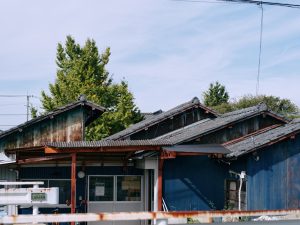
At its peak, there were around 200 weaving houses, but today fewer than 20 remain, and both the number of producers and the volume of production continue to decline. In response, the region has been shifting away from rivalry toward collaboration, with workshops sharing knowledge and working together to sustain the industry.
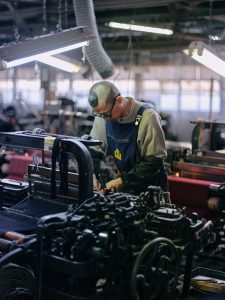
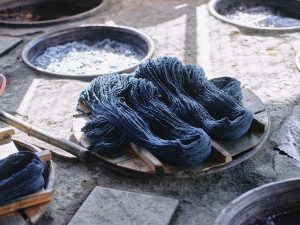
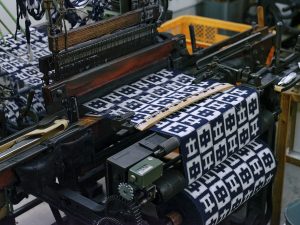
Sakata Orimono is one such workshop actively engaged in efforts not only for its own survival but for the sustainability of the entire Kurume kasuri region. One of its key initiatives is the in-house introduction of tying machines. Traditionally, the tying process—central to kasuri—has been divided among specialists, and today it is largely centralized within the Kurume Kasuri Hirokawa Town Cooperative Association.
However, concentrating this essential process in a single location poses a significant risk. Disasters or accidents could halt production entirely, and reliance on the cooperative also limits production capacity and flexibility in responding to large orders.
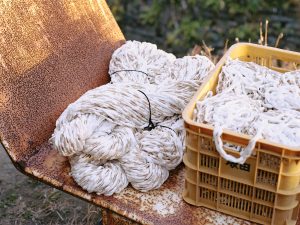
To address this, Sakata Orimono began developing and introducing its own tying machines around 2020, aiming to increase the number of tying facilities and open them up both within and beyond the region. Based on machines used by the cooperative but updated with modern technology, they invested in new tying machines for both warp and weft.
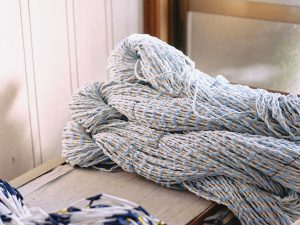
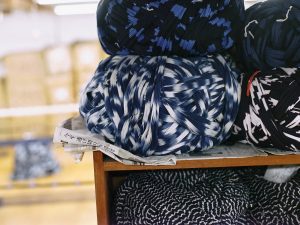
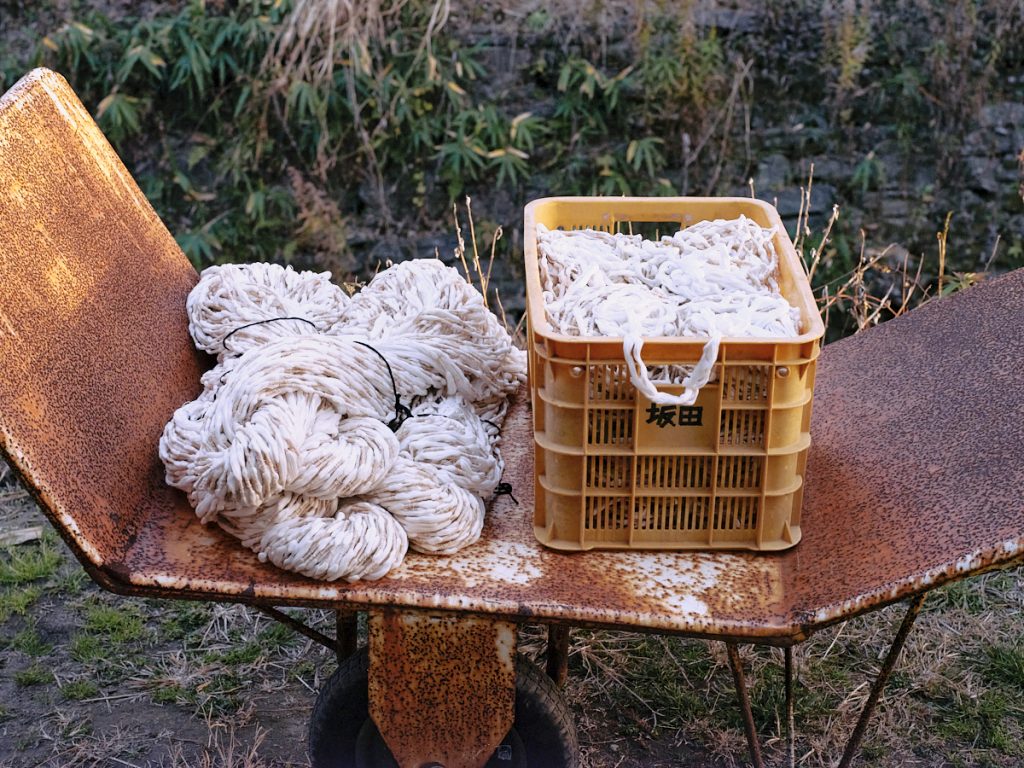
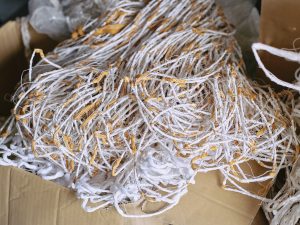
Despite being “machines,” they still require significant human support. It took considerable effort to bring them to a practical level of operation, and during the trial phase, large amounts of tied yarn were lost. In a region that has traditionally valued only finished fabric, such surplus yarn had never been considered meaningful.
A turning point came in 2023, when Kazuo Sakata, the third-generation head of the workshop, encountered the exhibition “I/KAT: The Possibilities of Kurume Kasuri” in Tokyo. This project, led by designer Shohei Iida, focused not on finished textiles but on the processes before fabric is formed, presenting experimental products made from tied yarn and leftover materials.

A scene from the I/KAT exhibition held at the method, Shibuya.
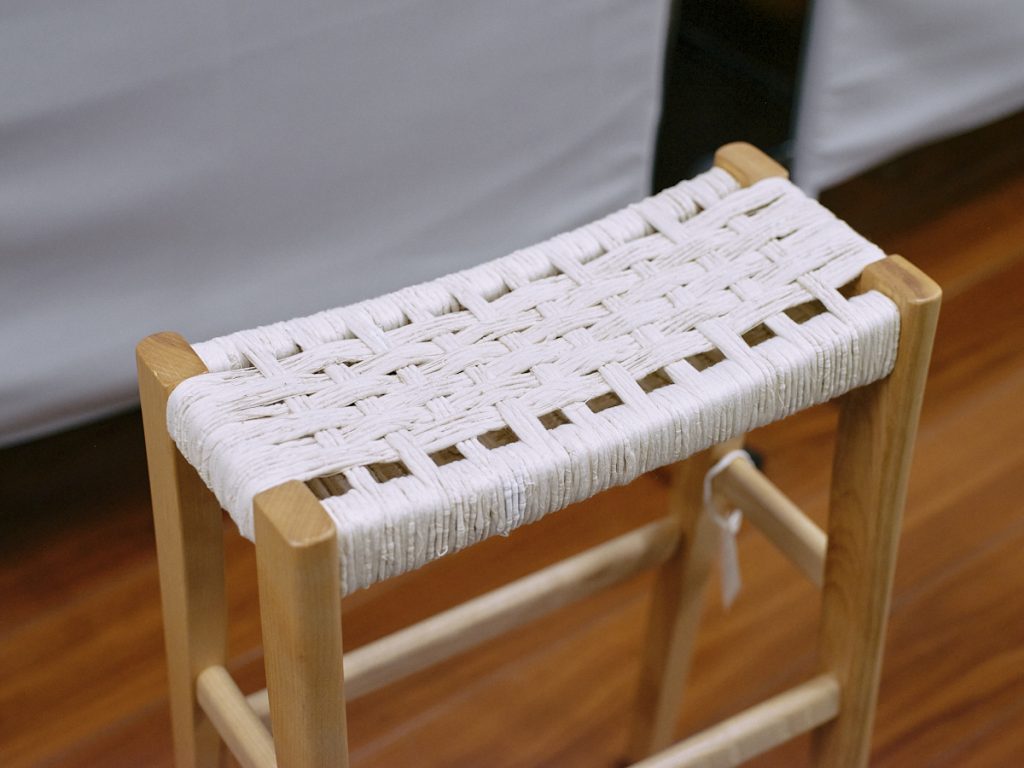
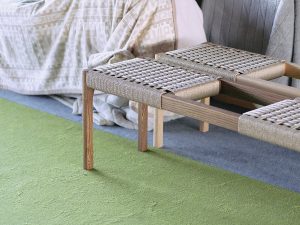
Inspired by this, Sakata began to reconsider the value of surplus tying yarn. Looking at the accumulated yarn, he thought, “Why not weave it as it is?” However, because the bundled yarn is too thick for standard Kurume kasuri looms, he collaborated with Kiyohara Orimono in Kyoto, a weaving house specializing in tsuzure-ori (tapestry weaving), used for large-scale works such as theater curtains. Using wide looms up to 15 meters in width and hand-inserting weft threads like a tapestry, they successfully created a new kind of textile using tied yarn.
The resulting “tied-yarn textile” became a prototype rich with possibilities. While it may not strictly qualify as Kurume kasuri fabric, it can be seen as an even more condensed expression of its essence.
Sakata Orimono’s mission is to “bring kasuri closer to people.” Notably, they emphasize “kasuri” rather than “Kurume kasuri,” recognizing that this technique has become rare worldwide. Rather than competing within the region, they aim to collaborate with other kasuri-producing areas globally to preserve and share the craft. Their efforts to sustain the essential tying process—and to develop new products using tied yarn itself—reflect a strong sense of urgency about the future of kasuri.
New Horizons of Kasuri Opened Through Tying
We see kukuru—the tying process at the core of kasuri—not merely as a step in production, but as the starting point of creation. By focusing on the yarn, structures, and processes generated through tying, we uncover overlooked value and transform it into new forms of expression. Incorporating automation and reinterpreting materials, we continue to push beyond traditional boundaries while remaining rooted in heritage—expanding the possibilities of kasuri.